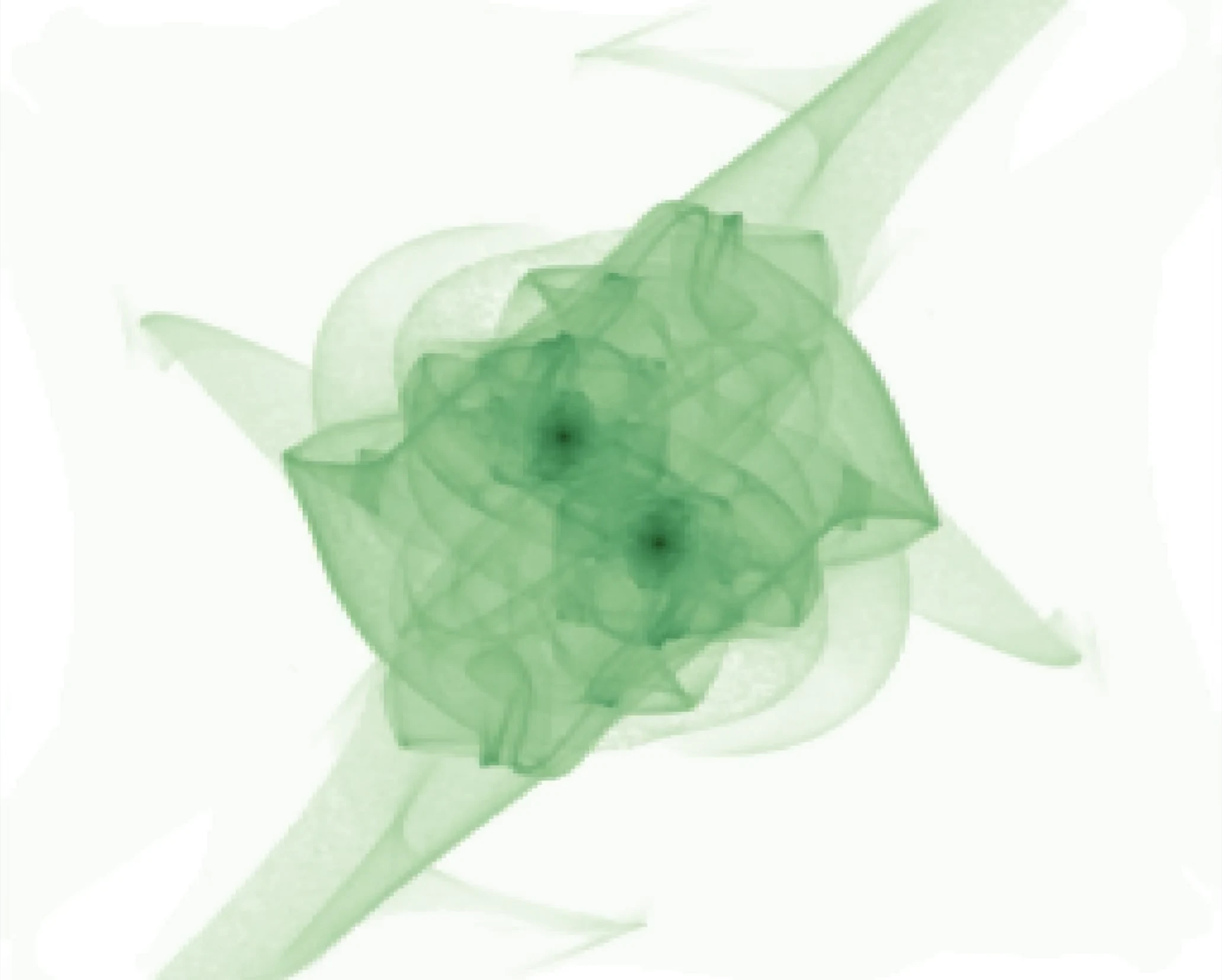
Our research spans three connected directions: the fundamental physics of magnetized plasmas, applications to fusion and space technology, and interdisciplinary work joining kinetic plasma theory with gravitation and scientific machine learning.
Fundamental plasma physics
We investigate how magnetized plasmas generate and reorganize fields, convert energy, and approach—or remain far from—equilibrium. Our canonical-vorticity framework treats magnetic field and fluid vorticity as parts of a single dynamical quantity, providing a unified view of magnetic reconnection, magnetogenesis, and related vorticity dynamics.
At kinetic scales, we connect single-particle trajectories to evolving phase-space distributions and then to macroscopic moments such as density, flow, current, and temperature. This micro-to-macro approach underpins our work on non-equilibrium relaxation, plasma thermodynamics, and coherent wave–particle interactions.
- Magnetic reconnection
- Magnetogenesis
- Canonical-vorticity dynamics (QHD)
- Non-equilibrium dynamics
- Plasma thermodynamics
- Wave–particle interactions
Selected papers
- A generalized two-fluid picture of collisionless reconnection, Physics of Plasmas (2017)
- The electron canonical battery effect, Physics of Plasmas (2019)
- Magnetogenesis by the canonical battery effect, Physical Review Research (2024)
- The canonical vorticity theoretical framework and its applications, AAPPS Bulletin (2025)
- Phase-space distribution and relaxation of fundamental plasma structures, Reviews of Modern Plasma Physics (2025)
- Collisionless relaxation of a disequilibrated current sheet, Nature Communications (2021)
- Equilibrium selection via current-sheet relaxation, Nature Communications (2023)
- Non-equilibrium formation and kinetic relaxation of magnetic flux ropes, Communications Physics (2024)
- Non-diffusive pitch-angle scattering by coherent whistler waves, JGR: Space Physics (2020)
Applied plasma physics
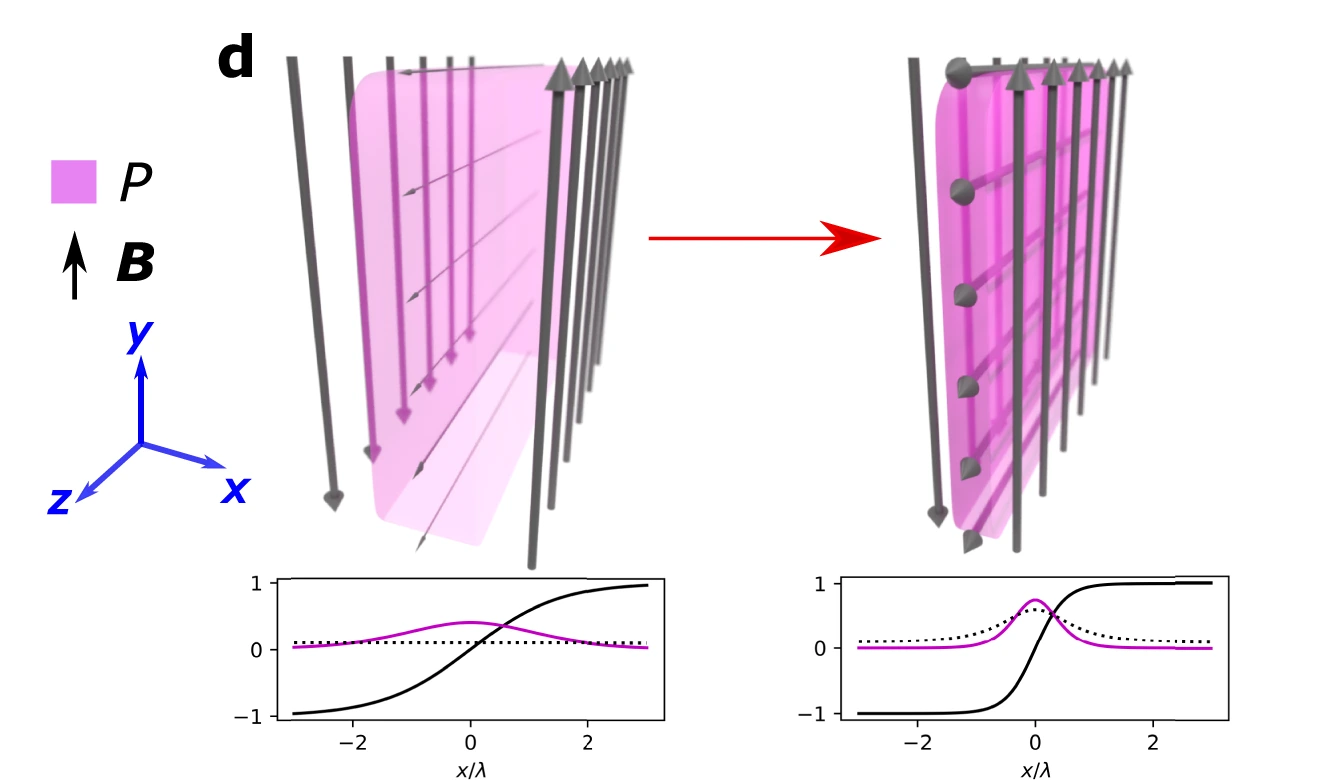
We translate fundamental plasma processes into strategies for fusion energy, spacecraft propulsion, and space-environment forecasting. In magnetic-confinement fusion, we study wave activity, resonant scattering, and the firewall effect as routes to controlling energetic and runaway electrons. We also investigate reconnection and beam-driven turbulence in compact, non-inductively formed plasma configurations relevant to novel fusion concepts.
For space applications, we use reconnection and coherent wave–particle dynamics to improve the physical basis for space-weather prediction and control. We also explore electric-propulsion concepts in which asymmetric magnetic reconnection converts normally bidirectional Alfvénic exhaust into net thrust.
- Nuclear fusion
- Runaway suppression
- Novel fusion reactor concepts
- Space propulsion
- Space-weather prediction and control
Selected papers and projects
- Intense whistler-frequency emissions at pedestal collapse in KSTAR, Nuclear Fusion (2020)
- Fast nonlinear scattering of runaway-electron beams, Nuclear Fusion (2024)
- Firewall effect on electron acceleration, Journal of Plasma Physics (2026)
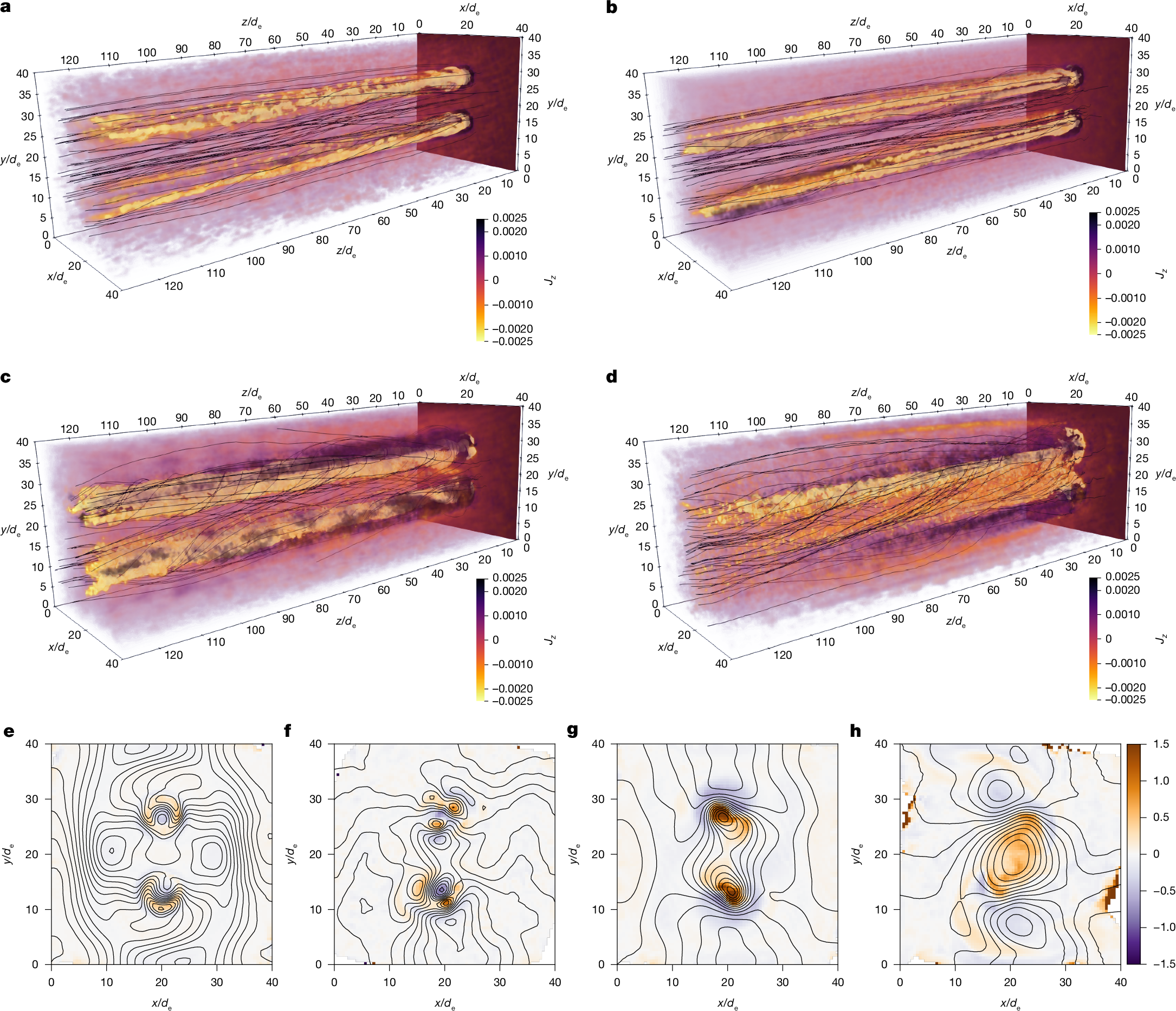
- Kinetic turbulence drives MHD equilibrium change via 3D reconnection, Nature (2025)
- Enablement or suppression of magnetic reconnection by plasma beta and guide field, Geophysical Research Letters (2024)
- Fast Alfvén waves in an applied-field MPD thruster, Physics of Plasmas (2024)
- A reconnection-based thruster concept using an asymmetric current source, APS GEC (2025)
Interdisciplinary
We combine plasma kinetic theory with ideas from gravitation and data science. The Einstein–Vlasov framework links collisionless phase-space dynamics to evolving spacetime geometry, while gravitoelectromagnetism provides a carefully bounded analogy between electromagnetic fields and gravitational inertial or tidal effects.
Our scientific-machine-learning efforts use physics-informed neural networks (PINNs) to reconstruct canonical-vorticity fields and non-ideal terms from sparse spacecraft observations. A complementary direction develops data-driven closures that carry kinetic information into reduced plasma-fluid simulations without the full cost of a particle model.
- Gravitoelectromagnetism and Einstein–Vlasov theory
- PINN-integrated data reconstruction
- Plasma simulation with data-driven closures
Frameworks and current directions
- The Einstein–Vlasov system / kinetic theory, Living Reviews in Relativity (2011)
- Gravito-electromagnetic analogies, Costa & Natário (2012)
- Reconstruction of canonical-vorticity fields during magnetic reconnection by PINNs, APS DPP presentation (2026)